
Single Dose Coffee Bean Storage Tubes: The Complete Guide (2026)
What Are Single Dose Coffee Bean Storage Tubes?
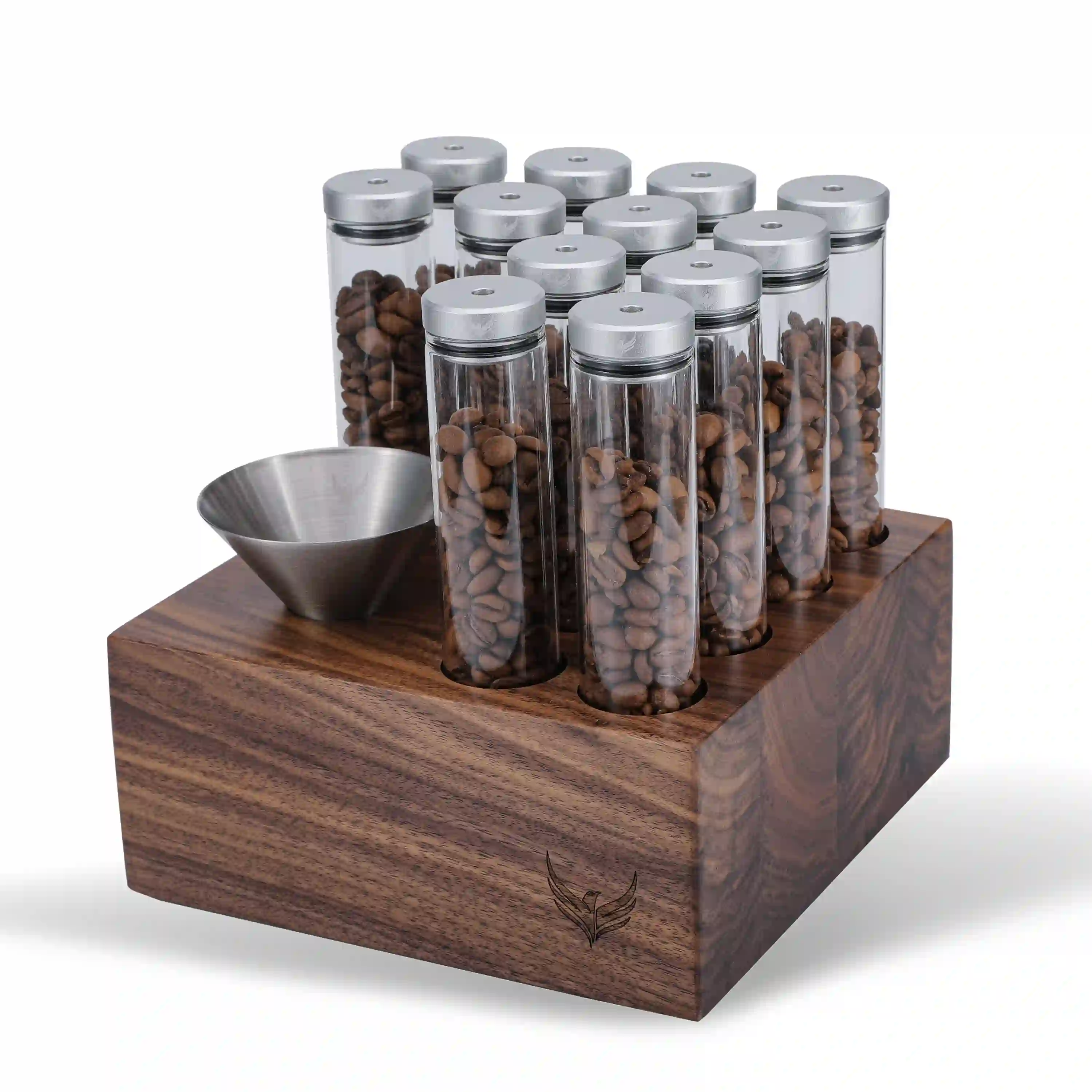
Single dose coffee bean storage tubes are individual glass containers designed to hold exactly one espresso dose of whole beans — typically 18 to 21 grams. The idea is simple: you weigh your beans once in a batch session, seal each dose in its own tube, and then grab a single tube every morning instead of reaching for a bag, scooping, and weighing before your first shot.
It sounds like a small convenience, but for anyone pulling espresso daily, the impact on both workflow speed and bean freshness is significant. Sealed tubes with one-way exhaust valves protect your beans from oxygen exposure between the day you pre-dose and the day you grind. And the time you save each morning — roughly 30-45 seconds of weighing and fiddling — adds up to hours over a month.
Why Single Dosing Changes Your Espresso Routine
The traditional way to store espresso beans is in a hopper on top of your grinder. You fill it with a bag's worth of beans and let the grinder draw from the hopper for each shot. This works, but it has real downsides that most home baristas discover over time.
First, beans in a hopper are exposed to air, light, and heat from the grinder motor. Oxidation begins immediately once the bag is opened, and a hopper full of beans can sit exposed for days. According to research covered by Barista Hustle, roasted coffee beans lose a measurable percentage of their aromatic compounds within minutes of grinding — and the degradation of whole beans in open storage, while slower, is a continuous process.
Second, hoppers make it harder to switch beans. If you want to try a new bag or brew a decaf shot in the evening, you have to empty the hopper, purge retained grounds, and refill. With single dose tubes, switching is effortless — just pick a different tube.
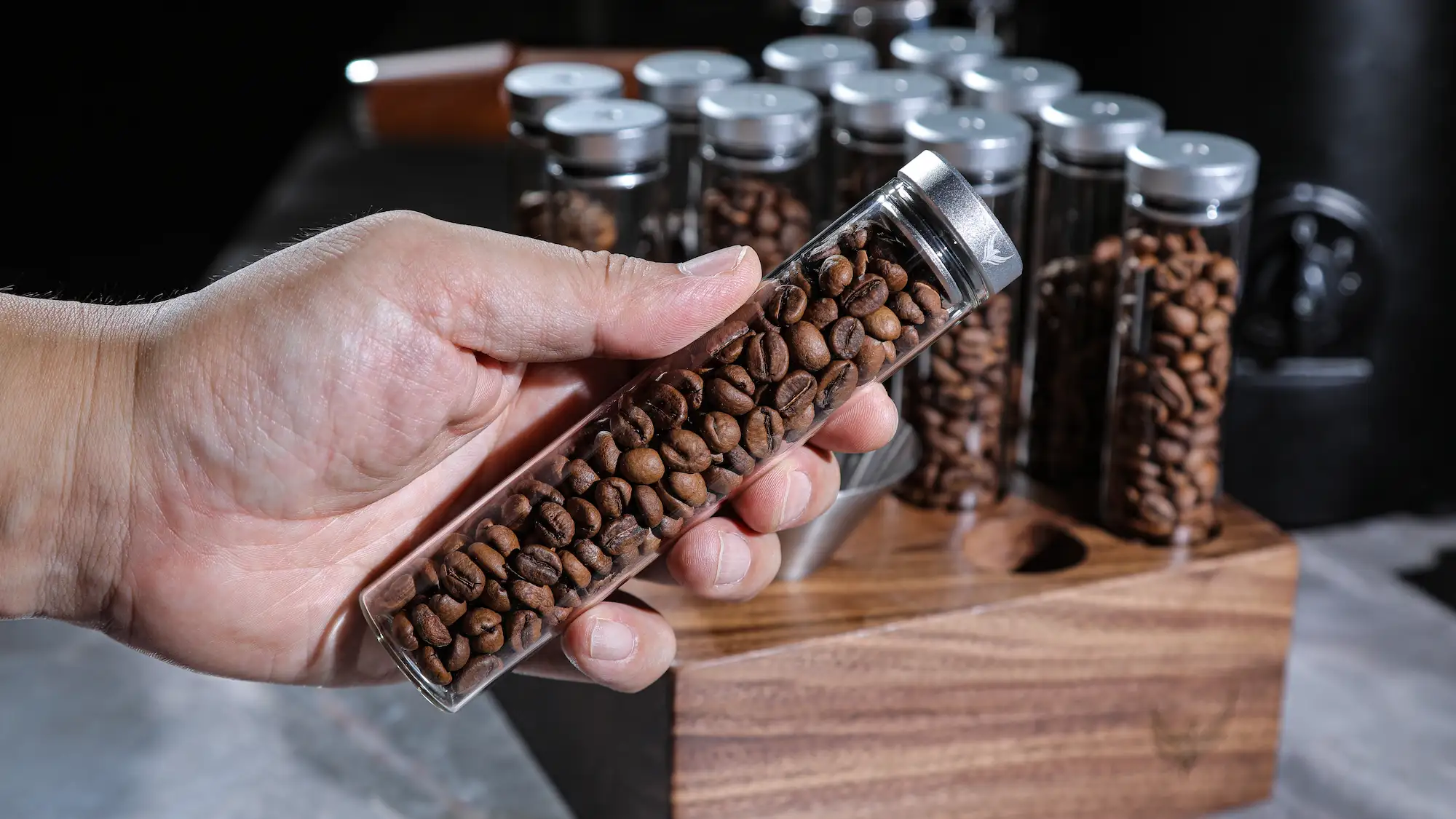
Third, single dosing forces you to weigh accurately. When you pre-dose into tubes, every tube contains exactly the weight you measured. No more eyeballing from a hopper and hoping your volumetric grinder timer lands in the right ballpark. Your coffee scale does the work once, and your consistency improves for every shot that follows.
Why One-Way Exhaust Valves Matter for Coffee Freshness
Freshly roasted coffee beans release carbon dioxide (CO2) for days — sometimes weeks — after roasting. This natural degassing process is what causes bags of fresh coffee to puff up. If you seal beans in an airtight container without any way for this gas to escape, pressure builds and can pop lids off or compromise the seal.
The obvious solution is to leave the container slightly open, but then you are letting oxygen in — the very thing you are trying to keep away from your beans. Oxygen drives oxidation, which destroys aromatic compounds and turns fresh coffee stale.
A one-way exhaust valve solves this elegantly. It lets CO2 push out through the valve when pressure builds inside the tube, but it blocks oxygen from flowing back in. Your beans degas naturally without exposure to the air that degrades them. It is the same technology used in professional coffee bags, but applied to individual dose-sized tubes.
This matters especially for espresso. The Specialty Coffee Association's standards note that coffee quality is directly tied to how beans are stored between roasting and brewing. A sealed tube with an exhaust valve gives each individual dose the best possible environment until the moment you grind it.
How to Use Coffee Storage Tubes: The Workflow
The pre-dosing session takes about 10-15 minutes and covers your entire week (or more, depending on your set size).
Step 1: Weigh your beans. Place a tube on your scale, tare to zero, and pour whole beans to your target dose — 18g is standard for most espresso baskets, but use whatever your recipe calls for.
Step 2: Fill through the funnel. If your set includes a dosing funnel (the KNODOS set does — stainless steel), seat it on top of the tube opening. Pour weighed beans through the funnel for a clean, no-spill transfer.
Step 3: Seal the lid. Screw on the one-way exhaust valve lid. The tube is now sealed against oxygen but can still release CO2 from degassing.
Step 4: Repeat. Fill all 12 tubes (or however many you have) and place them in the display stand. You now have over a week of pre-dosed espresso ready to go.
Each morning: Pick a tube from the stand, open the lid, pour the beans into your grinder, and start grinding. No bag, no scale, no measuring — your dose is already perfect. The whole process from tube to grinding takes under 10 seconds.
Storage Tubes vs. Hopper: Which Is Better?
This depends on your priorities and how you brew.
Hoppers win on: Pure convenience for high-volume brewing. If you are running a café and pulling dozens of shots of the same bean all day, a hopper makes sense. You fill it once and let the grinder dose automatically.
Storage tubes win on: Freshness, accuracy, flexibility, and aesthetics. For home espresso — where you pull 1-4 shots per day, often want to switch between beans, and care about dialing in — single dosing gives you noticeably better control. You know exactly what is in each dose, your beans stay sealed until the moment of use, and you never waste good coffee sitting in a hopper going stale.
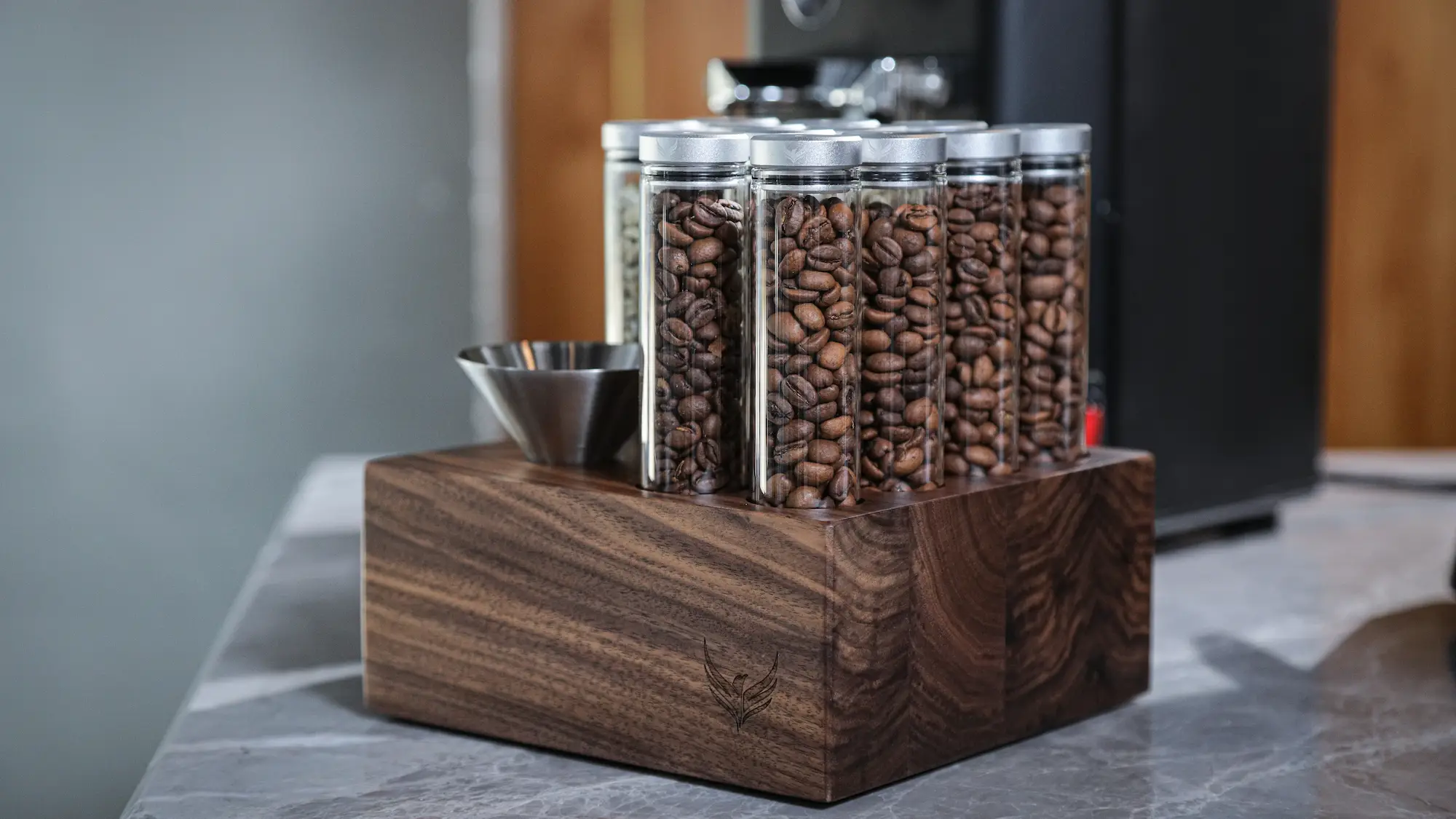
There is also the question of grinder retention. Single dose grinders like the Niche Zero, Eureka Mignon Single Dose, or DF64 are designed to grind exactly what you put in, with minimal grounds left behind. When you pour a pre-weighed tube of beans into one of these grinders, what goes in is what comes out. That level of dose accuracy is impossible with a hopper and timer-based dosing.
For the home barista who has invested in a good grinder, a tamper, a dosing funnel, and a blind shaker or WDT tool for distribution — storage tubes are the natural next step. They complete the chain from bean to basket with precision at every point.
Why Choose the KNODOS Storage Tube Set?
We designed the KNODOS set as a complete single dose system — not just tubes, but everything you need to start pre-dosing immediately. The set includes 12 glass tubes with one-way exhaust valve lids, 4 replacement tubes without lids, a solid walnut display stand with 12 drilled slots, and a stainless steel dosing funnel that seats on top of each tube for clean, easy filling.
The glass tubes are the core of the system. Glass does not absorb oils or odors — unlike plastic containers that can retain residue from previous beans and taint your next batch. The one-way exhaust valve in each lid is the same technology trusted by specialty coffee roasters for their retail bags, miniaturized for individual dose storage.
The walnut display stand is more than a holder. It is a solid block with precision-drilled slots that keep each tube upright and organized. At a glance, you can see exactly how many doses you have left before your next batch session. The walnut matches the same American walnut used across the KNODOS accessory line — your tampers, distributors, portafilters, and tamping stations all share the same wood grain and finish.
The included stainless steel dosing funnel sits on top of the tube opening and guides beans in without spilling. It is a small detail that makes the batch pre-dosing session clean and fast — no beans bouncing off the rim and onto your counter.
KNODOS Single Dose Coffee Bean Storage Tubes — Complete Set
- 12 glass tubes with one-way exhaust valve lids (18-21g capacity each)
- 4 replacement tubes without lids
- Walnut display stand with 12 precision-drilled slots
- Stainless steel dosing funnel for clean filling
Frequently Asked Questions
What are single dose coffee storage tubes?
Single dose coffee storage tubes are small glass containers designed to hold exactly one espresso dose of whole coffee beans (typically 18-21g). You pre-weigh your beans, seal them in individual tubes, and grab one tube each morning instead of weighing beans every time you brew.
Why do coffee storage tubes need a one-way exhaust valve?
Freshly roasted coffee beans release CO2 gas for days after roasting. A one-way exhaust valve lets this CO2 escape without letting oxygen in. Without the valve, sealed tubes would either build up pressure or you would need to leave the tube unsealed, exposing beans to oxygen and causing them to go stale faster.
How many grams of coffee fit in one storage tube?
Each tube holds a single espresso dose — typically 18 to 21 grams of whole beans, depending on bean density and roast level. Lighter roasts are denser and take up less space, while darker roasts are more voluminous.
Can I buy extra tubes separately?
The KNODOS storage tubes are sold as a complete set — 12 glass tubes with one-way exhaust valve lids, 4 replacement tubes without lids, a walnut display stand, and a stainless steel dosing funnel. Extra tubes are not currently available as a separate purchase.
How long do coffee beans stay fresh in storage tubes?
With a one-way exhaust valve lid that blocks oxygen while releasing CO2, beans in sealed tubes stay fresh significantly longer than beans left in an open bag. For best results, pre-dose your beans within 2-3 weeks of the roast date and use the tubes within that window. The sealed environment slows oxidation, which is the primary cause of stale coffee.
Related Guides
- Coffee Scale for Espresso — Single dosing works best when every dose is weighed.
- What Is an Espresso Dosing Funnel? — Getting your single dose into the basket without spilling it.
- How to Choose Espresso Accessories for Your Machine — Building the rest of your setup around single dosing.