
What Is an Espresso Puck Screen and Do You Need One?
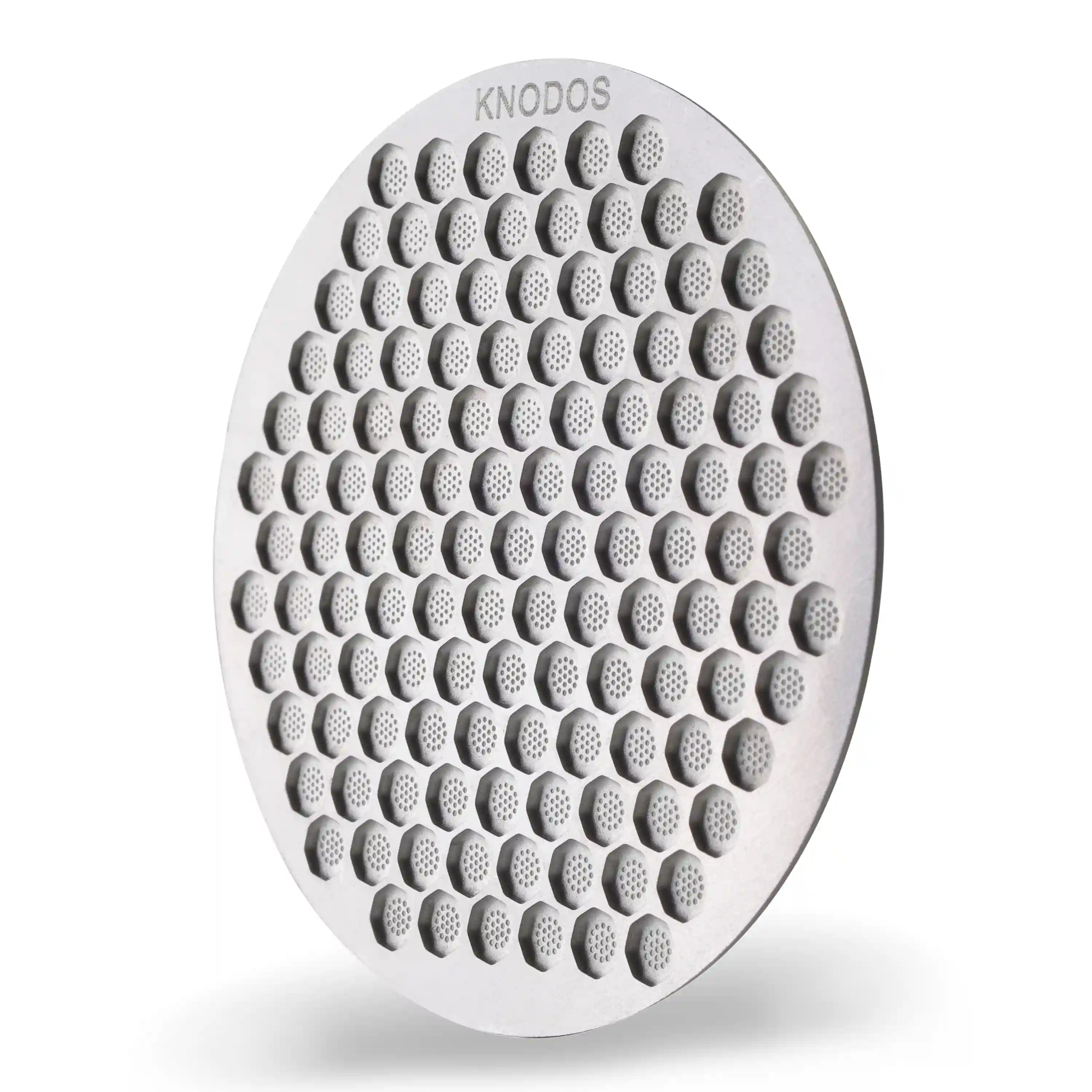
A puck screen is a thin metal disc that sits on top of your tamped coffee inside the portafilter. It acts as a barrier between the coffee puck and the shower screen, and its job is simple: distribute incoming water more evenly and protect your machine from coffee buildup. If you have ever noticed oily residue caked onto your group head shower screen, or if your espresso shots taste inconsistent from one pull to the next, a puck screen can help fix both problems. In this guide, we explain exactly how puck screens work, whether they actually improve your espresso, and how to pick the right size for your machine.
How a Puck Screen Works
When your espresso machine pushes water through the group head, it first hits the shower screen — a built-in metal disc that spreads water across the top of the portafilter. In theory, this should distribute water evenly. In practice, most shower screens — especially on home machines like the Breville Barista Express or Bambino — have uneven flow patterns. Some areas get more water pressure than others.
A puck screen adds a second layer of distribution directly on top of your coffee. Water hits the shower screen, passes through the puck screen's fine mesh, and then enters the coffee bed. This two-stage distribution reduces the chance of water punching through one spot (channeling) and instead forces it to spread more uniformly across the entire puck surface.
The screen also creates a physical barrier that prevents coffee grounds from touching and sticking to the shower screen. This is why many baristas report that their group heads stay significantly cleaner when using a puck screen — the spent puck pops out as a clean disc instead of leaving oily residue behind.
What a Puck Screen Actually Does for Your Espresso
There is a lot of debate online about whether puck screens make a noticeable difference. Based on our testing, here is what we have found:
Reduces channeling. This is the biggest benefit. By evening out water distribution before it hits the coffee, the puck screen minimizes the risk of water finding a weak spot and rushing through it. Channeling is the number one cause of sour, uneven espresso — and a puck screen directly addresses it.
Keeps the shower screen clean. Without a puck screen, coffee oils and fine particles get pushed up into the shower screen with every shot. Over time, this builds up and affects water flow. With a puck screen, the coffee never contacts the shower screen directly. Your backflush cleaning routine becomes less frequent and more effective.
Cleaner puck removal. The spent puck comes out as a neat disc that drops cleanly into the knock box. No grounds stuck to the shower screen, no mess on the counter.
Slightly improved extraction consistency. We have measured extraction percentages with and without puck screens across multiple machines, and the standard deviation drops noticeably with a screen in place. Your shots become more repeatable — not necessarily better on average, but more consistent from one shot to the next.
Who benefits most? If you are using a machine with a basic shower screen (most Breville models, DeLonghi Dedica, Gaggia Classic), a puck screen makes the biggest difference. High-end machines with precision shower screens (like IMS or VST) already have good water distribution, so the improvement is smaller — but the cleanliness benefit still applies.
How to Use a Puck Screen — Step by Step
Using a puck screen is straightforward:
- Prepare your puck as normal. Grind, dose, distribute with a WDT tool, and tamp your coffee. The puck screen does not change your puck preparation routine.
- Place the screen on top. After tamping, lay the puck screen flat on the surface of the compressed coffee. It should sit evenly with no tilting. If it tilts, your tamp was not level.
- Lock in and pull your shot. Insert the portafilter into the group head as usual. The screen adds less than 1mm of height, so clearance is rarely an issue — especially with ultra-thin 0.8mm screens.
- Remove after the shot. Knock the puck into your knock box. The screen usually sticks to the puck or stays in the basket — just rinse it under hot water before your next shot.
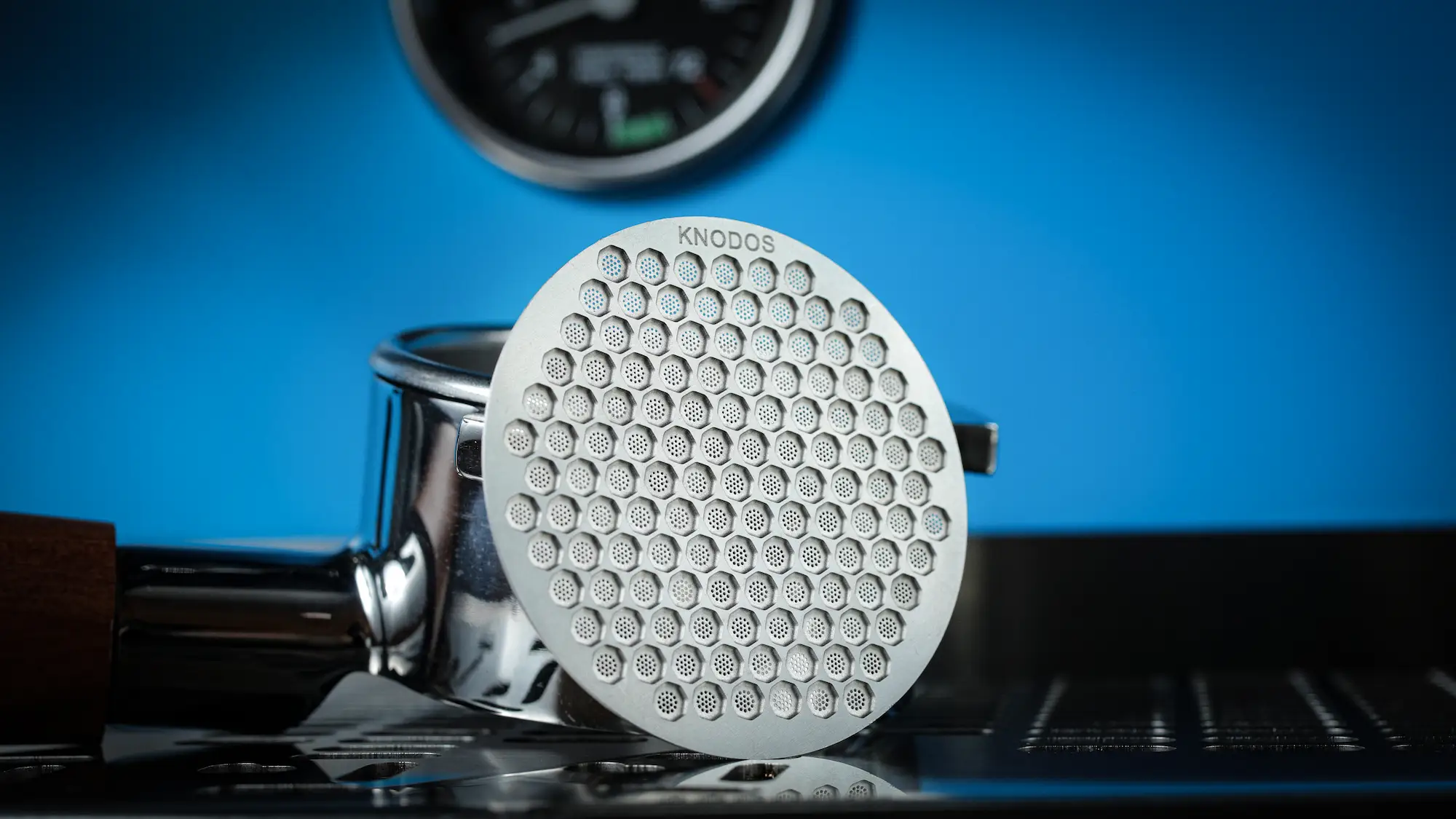
Puck Screen Thickness: 0.8mm vs 1.5mm vs 1.7mm
Puck screens come in different thicknesses, and the choice matters more than most people think — especially on machines with tight portafilter clearance.
0.8mm (ultra-thin) — The thinnest option available. Preserves maximum headspace inside the portafilter, which is critical for machines like the Breville Bambino and Bambino Plus where the gap between the puck and shower screen is already tight. An ultra-thin screen provides water distribution benefits without reducing your dose capacity. This is the thickness we use in all KNODOS puck screens.
1.5mm (standard) — The most common thickness from other brands. Provides good water dispersion but takes up more room in the basket. On some 54mm Breville machines, a 1.5mm screen combined with an 18g dose can cause the portafilter to feel tight when locking in.
1.7mm (thick) — Maximum water distribution, but significantly reduces headspace. Best suited for commercial 58mm machines with large portafilter clearance. Not recommended for most home espresso setups.
Our recommendation: 0.8mm is the safest choice for home baristas. It works on every machine size without headspace issues, and in our testing, the extraction improvement between 0.8mm and 1.7mm is minimal — the bigger factor is having a screen at all versus not having one.
Which Size Puck Screen Do You Need?
The puck screen must match your portafilter basket diameter. Too small and it will not cover the entire puck surface. Too large and it will sit on top of the basket rim instead of inside it. Here are the three standard sizes:
51mm — Fits DeLonghi Dedica, Smeg, Casabrews, Gevi, La Pavoni, and other 51mm home machines. The KNODOS 51mm puck screen is precision-cut to sit flush inside these baskets.
54mm (53.3mm actual diameter) — Fits all Breville (Sage) machines: Barista Express, Barista Pro, Barista Touch, Bambino, Bambino Plus, Duo Temp Pro, Infuser, and the Barista Touch Impress. The screen measures 53.3mm to fit snugly inside the 54mm basket without overlapping the rim.
58mm (58.35mm actual diameter) — Fits the industry standard 58mm portafilters used by Gaggia Classic, Rancilio Silvia, Rocket, Profitec, Lelit, La Marzocco, and all E61 group head machines.
Not sure which size your machine uses? Check our machine compatibility finder — enter your machine model and it will tell you the exact portafilter size.
KNODOS Espresso Puck Screen — 2 Pack
Ultra-thin 0.8mm stainless steel. Black + silver combo. Dishwasher safe, corrosion-resistant.
How to Clean Your Puck Screen
Puck screens are low-maintenance, but regular cleaning keeps them performing at their best:
After every shot: Rinse under hot running water. Most coffee grounds wash off immediately. A quick wipe with your finger removes any remaining residue. This takes about 5 seconds.
Weekly deep clean: Soak the screen in a solution of espresso machine cleaner (Cafiza, Puly Caff, or similar) for 10–15 minutes. This dissolves built-up coffee oils that water alone cannot remove. Rinse thoroughly afterward.
Dishwasher: Stainless steel puck screens are dishwasher safe. Throw them in with your regular load once a week for a thorough clean.
What to avoid: Do not use abrasive scrubbers or steel wool — they can damage the fine mesh and create uneven flow patterns. A soft brush or cloth is all you need.
Espresso With vs Without a Puck Screen
Here is what we have observed in side-by-side testing on a Breville Barista Express and a Gaggia Classic Pro:
Extraction consistency: With a puck screen, our shot-to-shot extraction variation dropped from roughly ±1.5% to ±0.6%. The puck screen does not magically increase extraction — it makes each shot more like the last one.
Shower screen cleanliness: After 20 shots without a puck screen, the shower screen had visible brown oil buildup. After 20 shots with a screen, it looked nearly clean — just a light dusting that rinsed off in seconds.
Puck knock-out: Without a screen, the spent puck often fragments or leaves grounds stuck in the basket and on the shower screen. With a screen, the puck pops out cleanly in one piece almost every time.
Taste difference: Subtle but real. The improvement is most noticeable on light roasts where channeling causes harsh sourness. On dark roasts, the difference is harder to detect. If your shots are already dialed in and consistent, the flavor change is minor. If you are struggling with inconsistent shots, a puck screen can make a meaningful improvement.
Frequently Asked Questions
Does a puck screen improve espresso?
Yes. A puck screen distributes water more evenly across the coffee puck, which reduces channeling and leads to more consistent extraction. It also protects your machine's shower screen from coffee oils and residue, making cleanup easier.
What size puck screen do I need for a Breville?
All Breville (Sage) machines use 54mm portafilters. The correct puck screen size is 53.3mm — this provides a snug fit inside the basket without blocking the edges. A standard 54mm screen may be slightly too large and sit on top of the basket rim instead of inside it.
Do you put the puck screen on top or bottom of the coffee?
On top. After tamping your coffee, place the puck screen directly on the surface of the compressed puck before locking the portafilter into the group head. The screen sits between the coffee and the shower screen.
How do you clean a puck screen?
Rinse under hot water immediately after pulling your shot — most grounds will wash right off. For deeper cleaning, soak in a solution of espresso machine cleaner (like Cafiza) for 10–15 minutes once a week. Stainless steel puck screens are also dishwasher safe.
How thick should an espresso puck screen be?
Between 0.8mm and 1.7mm. Thinner screens (0.8mm) preserve more headspace in the portafilter, which matters for machines with tight clearance like the Breville Bambino. Thicker screens add more water dispersion but reduce the room available for coffee grounds.