
Why Is My Espresso Sour or Bitter? (2026)
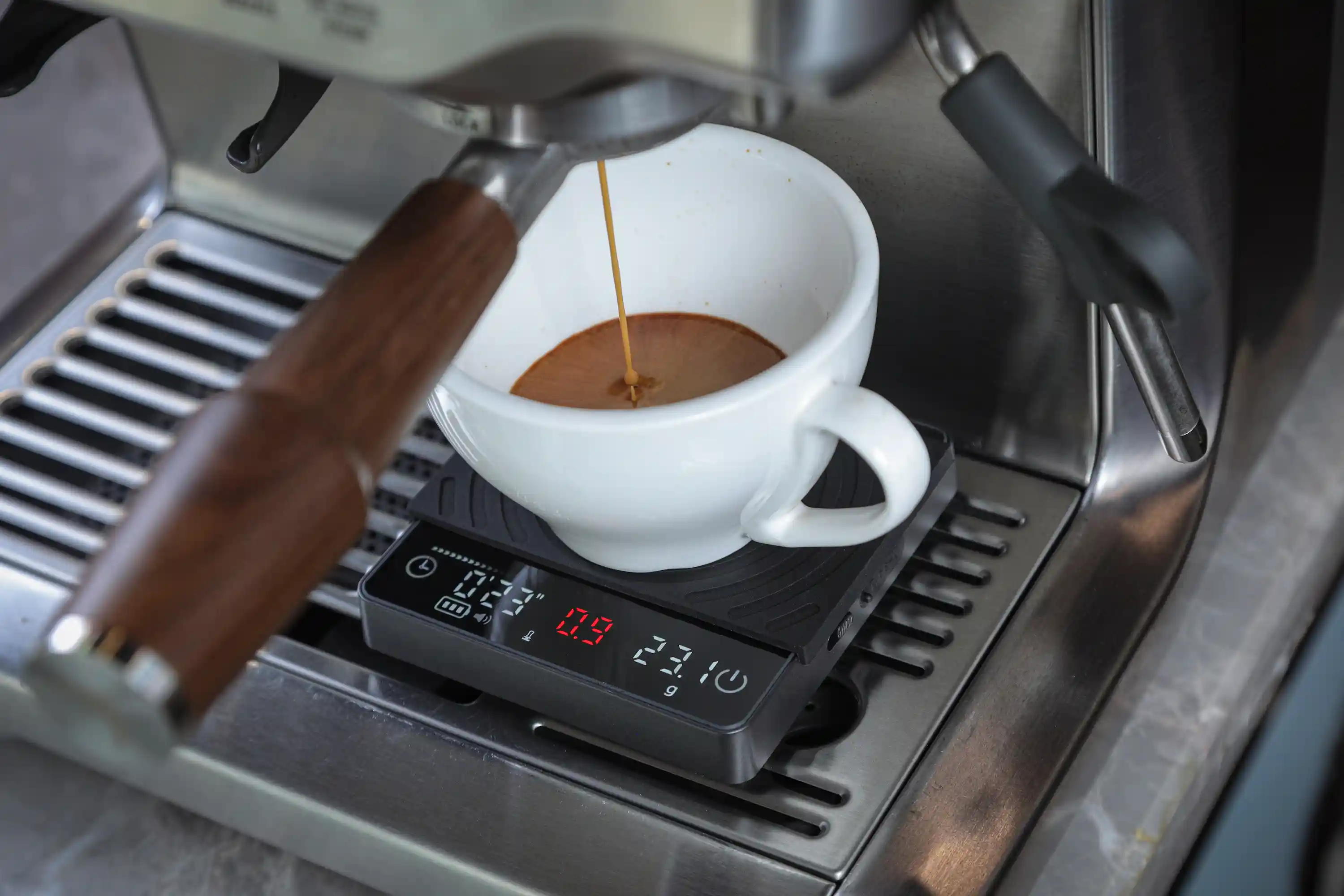
Why Does Espresso Taste Sour or Bitter?
Espresso tastes sour when it is under-extracted and bitter when it is over-extracted — the flavour in the cup is really a readout of how much the water managed to dissolve from the grounds. Pull too little and the bright, fruity acids arrive with nothing sweet behind them, so the shot tastes sharp and sour. Pull too much and the harsh, dry compounds that come out last take over, so it tastes bitter. Almost every espresso fault sits on this one scale, and once you can taste where a shot lands on it, fixing it becomes a matter of moving a single variable in the right direction.
"Extraction" just means the percentage of the ground coffee that ends up dissolved in your cup. Water works through soluble flavours in a rough order: acids and fruit notes first, then sugars and sweetness, then the heavier, more bitter compounds last. A balanced shot stops in the sweet middle. Stop too early and you taste mostly acid; go too far and you drag out the bitterness. The Specialty Coffee Association formalises this idea as a target extraction range, and Barista Hustle covers the underlying chemistry in depth.
The practical takeaway is that "sour" and "bitter" are not random flaws to be endured. They are signposts. Each one points to a specific direction of adjustment, and this guide walks through how to read the signpost and which lever to pull.
What a Sour Shot Is Telling You
A sour espresso is under-extracted — the water passed through too quickly and dissolved too little. It tastes sharp and tangy, sometimes like lemon or unripe fruit, and it often has a thin body and a short, empty finish that leaves you wanting the sweetness that never arrives. People frequently mistake this for the beans being "too acidic," but the acidity is only unbalanced because the sugars behind it were never extracted.
The most common causes of a sour shot are a grind that is too coarse, a shot that gushed out too fast, a brew temperature that is too low, or a ratio that was cut too short. All four have the same effect: not enough contact and resistance for the water to pull a full extraction. A shot that finishes in well under 20 seconds and tastes sharp is the classic under-extraction signature.
The fix is to raise extraction. Grinding finer is the biggest and best first move because it slows the water and gives it more to dissolve. If a finer grind alone does not get you there, a slightly longer ratio or a couple of degrees more heat will nudge the shot the rest of the way into balance.
What a Bitter Shot Is Telling You
A bitter espresso is over-extracted — the water dissolved too much and dragged out the harsh compounds that come last. It tastes dry, ashy or astringent, lingers unpleasantly at the back of the tongue, and can have a hollow, burnt edge. A very dark roast exaggerates all of this, because dark roasts are more soluble and give up their bitter compounds more readily.
Typical causes are a grind that is too fine, a shot that ran far too long, water that is too hot, or a machine carrying a build-up of old, rancid coffee oils. A shot that takes more than about 35 seconds to reach your target weight and tastes harsh is usually over-extracted. Cleanliness matters more than people expect here: stale oils in the group head, basket and portafilter add bitterness to every shot regardless of how carefully you dial in.
The fix is to lower extraction. Grinding coarser speeds the water up and is the first move. From there, a shorter shot, a slightly cooler temperature, and a clean basket will pull a bitter espresso back toward sweetness.
Sour vs Bitter: A Quick Diagnostic
Before you change anything, place the shot on the scale between under- and over-extraction. This table is the fastest way to translate a taste into a direction. Read the flavour, confirm which side of extraction it points to, and note the first thing to change.
| What you taste | What it means | Extraction | First fix |
|---|---|---|---|
| Sharp, sour, tangy, thin, empty finish | Too little dissolved | Under-extracted | Grind finer |
| Harsh, dry, ashy, astringent, burnt | Too much dissolved | Over-extracted | Grind coarser |
| Sour and bitter in the same sip | Water is channeling through the puck | Uneven (both at once) | Fix puck prep, not the grind |
| Sweet, balanced, syrupy, long finish | Extraction landed in the middle | Balanced | Nothing — write the recipe down |
The fourth row matters as much as the others: when a shot is good, record the grind setting, dose, yield and time immediately, because a repeatable good shot is the entire goal of dialling in.
The First Fix: Grind Size
Grind size is the most powerful lever you have, so it is always the first one to move. It controls how fast water flows through the coffee bed, and flow rate is what sets extraction. A finer grind packs the puck tighter, slows the water, and raises extraction — the cure for a sour shot. A coarser grind loosens the puck, speeds the water, and lowers extraction — the cure for a bitter shot.
The discipline that makes dialling in work is changing only the grind, and only a little, between shots. Move one step on your grinder, pull again, and taste before touching anything else. If you change grind, dose and temperature all at once, a better shot tells you nothing, because you cannot know which change caused it. Espresso grinding is also sensitive: a single step can swing a shot several seconds and noticeably shift the flavour, so small moves are the right moves.
Grind is where perhaps eight out of ten sour-or-bitter problems are solved. Only once the grind is close do the finishing levers — ratio, time and temperature — become worth touching.
The Other Levers: Ratio, Time and Temperature
Once the grind is in the right neighbourhood, three finishing levers move the shot the last few percent. Each one pushes extraction up or down, so each one has a "sour" direction and a "bitter" direction.
| Lever | If it's too sour (raise extraction) | If it's too bitter (lower extraction) |
|---|---|---|
| Grind | Finer | Coarser |
| Ratio (espresso out) | Longer — pull a little more liquid | Shorter — stop the shot earlier |
| Shot time | Longer (achieved via a finer grind) | Shorter (achieved via a coarser grind) |
| Water temperature | Hotter (toward 96°C / 205°F) | Cooler (toward 90°C / 195°F) |
A sensible starting recipe gives all of this a reference point. Weigh your dose, weigh the espresso out, and time the pour, then adjust from these numbers rather than from guesswork.
| Parameter | Starting point |
|---|---|
| Dose (coffee in) | 18 g in a double basket |
| Yield (espresso out) | ~36 g (a 1:2 ratio) |
| Shot time | 25–30 seconds |
| Water temperature | 90–96°C (195–205°F) |
| Grind | Adjusted until the shot hits the time above |
Dose interacts with the rest, so keep it fixed while you learn. A heavier dose in the same basket generally lowers extraction and a lighter dose raises it, but changing dose also changes the ratio and the headroom in the basket. It is easier to leave the dose alone and dial with grind first.
When It Tastes Both Sour and Bitter
If a single shot tastes sour and bitter at the same time, the problem is not your dial-in — it is channeling. Channeling happens when water finds a crack or a soft spot and races through it instead of soaking the whole puck evenly. The coffee lining that channel gets blasted and over-extracts into bitterness, while the rest of the bed barely gets wet and under-extracts into sourness. You taste both faults in one sip, and no amount of grind adjustment fixes it, because the average extraction can look fine while the puck is extracting unevenly.
This is a puck-preparation problem, and it is where technique and tools earn their place. Clumps in the grounds and an uneven or tilted tamp are the usual culprits. The reliable fixes are to break up clumps and distribute the grounds with a WDT tool, level the bed with a distributor, and tamp level so the surface is flat. A puck screen on top of the bed helps spread the water more evenly as it arrives. The fastest way to actually see channeling is a bottomless portafilter: an even shot pours in one calm stream, while a channeling shot sprays and squirts.
In other words, if grind changes are not resolving a shot that tastes muddled and harsh-yet-sour, stop turning the grinder and fix how you are preparing the puck instead.
A Simple Dial-In Routine
Dialling in is not guesswork once you have a method. The routine below changes one thing at a time so every shot teaches you something. For the reasoning behind each puck-prep step, see our guide on how to choose espresso accessories for your machine.
Step 1: Start from a known recipe
Begin with 18 g in, about 36 g out, in 25–30 seconds. A fixed reference is what lets you interpret every change that follows.
Step 2: Taste and place the fault
Sip and decide where the shot sits. Sour and sharp means under-extracted; harsh and dry means over-extracted; muddled and both means channeling.
Step 3: Change the grind first
Grind finer for a sour shot, coarser for a bitter one, one small step at a time. Grind moves the flavour more than anything else.
Step 4: Change only one variable at a time
Pull another shot and taste before adjusting anything else. If you move two things at once, a better shot cannot tell you why it improved.
Step 5: Weigh everything
Weigh the dose in and the espresso out with a coffee scale. A good shot is only useful if it is a recipe you can repeat tomorrow.
Common Mistakes to Avoid
- Changing two things at once. Grind and ratio and temperature together tell you nothing. Move one variable, taste, then decide the next move.
- Dialling in without a scale. Eyeballing the dose and yield means your ratio drifts shot to shot, so you are chasing a moving target.
- Blaming the beans first. Nine times out of ten a sour or bitter shot is a grind or prep issue, not a bad bag of coffee.
- Ignoring freshness. Beans much older than a month, or fresher than a couple of days off roast, both make dialling in harder. Aim for roughly 7–21 days.
- Forgetting to clean. Rancid oils in the basket, portafilter and group head add bitterness no dial-in can remove. Backflush and wash regularly.
- Turning the grinder when the real fault is channeling. If the shot is sour and bitter together, fix distribution and the tamp, not the grind.
Tools for an Even, Repeatable Shot
No accessory fixes a wrong grind — that is the grinder's job. What good puck-prep tools do is remove the two things that sabotage a dial-in: uneven extraction and inconsistency shot to shot. Eliminate channeling and make each step repeatable, and the taste scale in this guide becomes something you can actually control.
The puck-prep kit that keeps extraction even
KNODOS makes the tools that stand between a muddled shot and a balanced one — each handcrafted in solid wood and sized to your exact portafilter. A WDT tool breaks up clumps, a distributor levels the bed, a calibrated tamper delivers the same pressure every time, and a puck screen spreads the water as it arrives.
- WDT tools — break up clumps for even distribution
- Distributors — level the bed before tamping
- Calibrated tampers — the same level, consistent tamp every shot
- Puck screens — spread water evenly across the puck
- Coffee scales — turn a good shot into a repeatable recipe
Not sure what fits your machine? The KNODOS Machine Finder lists every accessory in the right size for your model.
Get the grind close, prepare the puck evenly, and weigh what you brew, and "why is my espresso sour or bitter" stops being a daily mystery and becomes a quick, deliberate adjustment. If you want to go deeper on the single step that causes the most channeling, read our guide on how to tamp espresso.
Frequently Asked Questions
Why is my espresso sour?
Sour espresso is under-extracted: the water pulled out the fast-dissolving fruit acids but not enough of the sugars and deeper compounds that balance them. The usual causes are a grind that is too coarse, a shot that ran too fast, water that is too cool, or a ratio that is too short. Grinding finer is the first fix.
Why is my espresso bitter?
Bitter espresso is over-extracted: the water dissolved too much and pulled out the harsh, dry compounds that come out last. Common causes are a grind that is too fine, a shot that ran too long, water that is too hot, a very dark roast, or a machine that needs cleaning. Grinding coarser is the first fix.
Is sour espresso under-extracted or over-extracted?
Sour espresso is under-extracted. Acidity is one of the first things water pulls from coffee, so when extraction stops too early the acids dominate and nothing sweet balances them. If your shot tastes sharp, sour or empty, you need more extraction: grind finer, run a slightly longer shot, or raise the water temperature.
Is bitter espresso under-extracted or over-extracted?
Bitter espresso is over-extracted. Bitterness comes from compounds that dissolve late in the shot, so when extraction goes too far they take over. If your shot tastes harsh, dry or ashy, you need less extraction: grind coarser, pull a shorter shot, or lower the water temperature slightly.
How do I fix sour espresso?
Grind finer. A finer grind slows the water down and raises extraction, which is exactly what a sour shot is missing. Change the grind first and only one step at a time, then taste again. If it is still sour after grinding finer, try a slightly longer ratio (more liquid out) or a hotter brew temperature.
How do I fix bitter espresso?
Grind coarser. A coarser grind speeds the water up and lowers extraction, which pulls a bitter shot back toward balance. Adjust grind first, one step at a time, then taste. If it is still bitter, pull a shorter shot, lower the temperature a little, and make sure the machine and basket are clean, because old coffee oils taste bitter.
Should I grind finer or coarser if my espresso is sour?
Finer. Sour means under-extraction, and a finer grind adds resistance so water moves through the puck more slowly and dissolves more coffee. Make one small adjustment, pull another shot, and taste. Grinding finer is the single most effective change for a sour, sharp espresso.
Why is my espresso both sour and bitter at the same time?
Tasting sourness and bitterness in one shot usually means the water is channeling, finding a weak path through the puck. It over-extracts the grounds around the channel (bitter) while barely touching the rest (sour). This is not a dial-in problem but a puck-prep problem: distribute the grounds evenly, stir with a WDT tool, and tamp level.
Does grind size affect espresso taste the most?
For most home setups, yes. Grind size controls how fast water flows through the puck, and flow rate controls extraction, which is what you taste as sour or bitter. It is the first variable to adjust and the one that moves the flavour most. Dose, ratio, time and temperature are finishing adjustments once the grind is close.
What espresso ratio should I start with?
Start with a 1:2 ratio: about 18 grams of coffee in the basket to roughly 36 grams of espresso out, pulled in about 25 to 30 seconds. That is a reliable middle ground for most modern espresso. From there, a slightly longer ratio lifts a sour shot and a shorter ratio tames a bitter one.
What water temperature should I use for espresso?
Most espresso is brewed between about 90 and 96 degrees Celsius (195 to 205 Fahrenheit). Hotter water extracts more, so nudging the temperature up can help a sour, under-extracted shot; cooler water extracts less and can calm a bitter one. Temperature is a fine adjustment, so sort out grind and ratio first, then use it to polish the flavour.
How long should an espresso shot take?
A common target is 25 to 30 seconds for a 1:2 shot from the moment the pump starts. A shot that gushes out in under 20 seconds is usually under-extracted and sour; one that drips past 35 seconds is often over-extracted and bitter. Shot time is a symptom, though, and you change it mainly by adjusting the grind.
Can stale beans make espresso taste sour?
They can taste flat and lifeless, and very fresh beans can also read as sour. Coffee less than a few days off roast releases a lot of CO2, which disrupts even extraction and sharpens acidity. For espresso, beans are usually best from about 7 to 21 days after roasting. If yours are older than a month, freshness may be the real problem.
Does channeling cause bitterness?
Yes, and sourness at the same time. When water forces a channel through the puck, it over-extracts the coffee lining that channel, which tastes bitter, while under-extracting the rest, which tastes sour and thin. Even, clump-free distribution and a level tamp prevent it, which is why a bottomless portafilter is useful for spotting channeling.
Do I need a scale to dial in espresso?
It is the single most useful tool for dialling in. Taste only tells you which way to move; a scale tells you exactly what you changed. Weighing the dose in and the espresso out turns your ratio into a number you can repeat, so when a shot is good you can make it again, and when it is off you can see why.
Can a dirty machine make espresso taste bitter?
Yes. Old coffee oils build up in the group head, basket and portafilter and turn rancid, adding a stale, bitter edge to every shot no matter how well you dial in. Backflush the machine if it supports it, and wash the basket and portafilter regularly. Clean equipment is a precondition for good taste, not an optional extra.