
What Is a Blind Espresso Shaker and Do You Need One? (2026 Guide)
What Is a Blind Espresso Shaker?
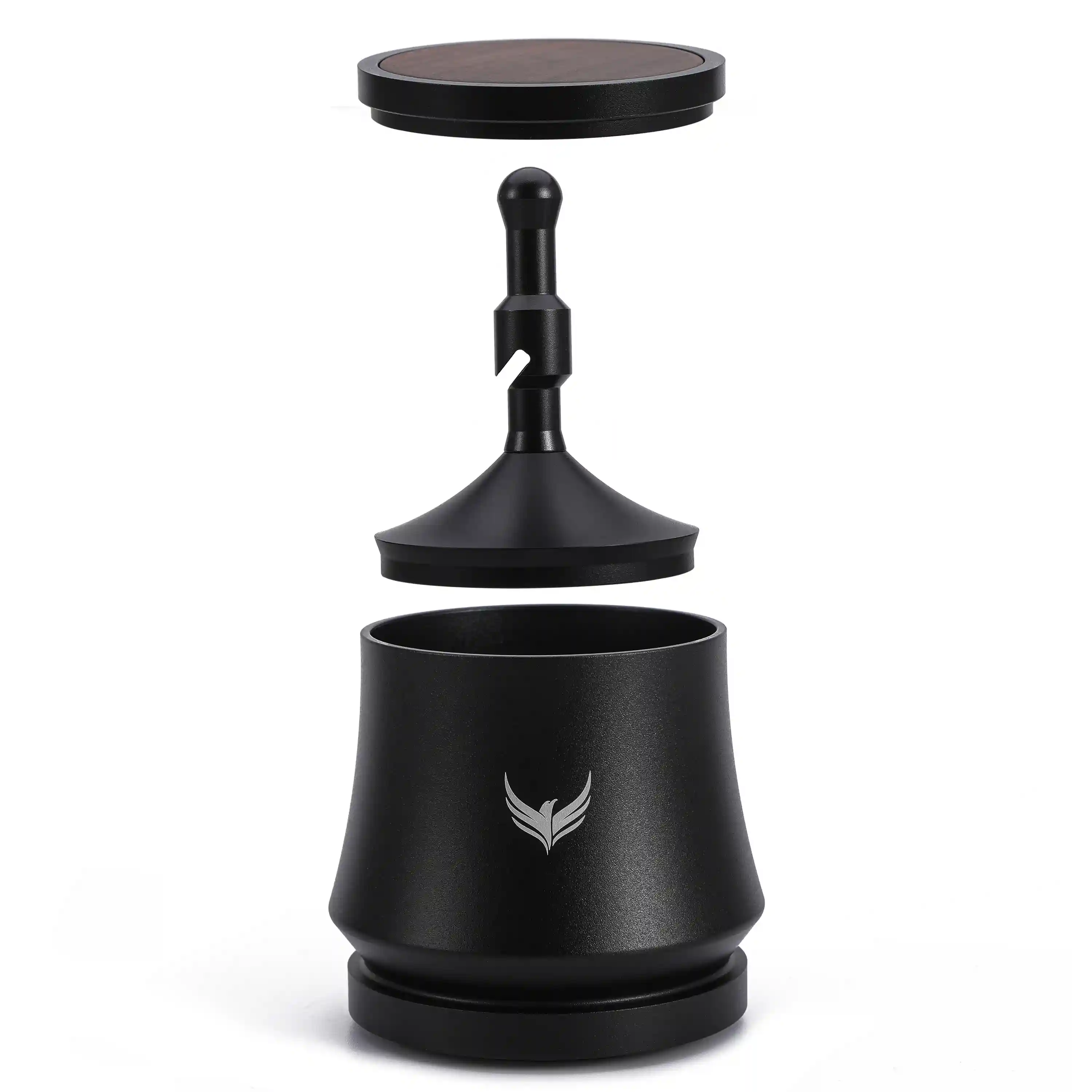
A blind espresso shaker is a dosing accessory designed to break up clumps in your coffee grounds before tamping. It consists of a cup that fits snugly onto your portafilter basket and a sealed lid — you dose, close, shake, and transfer perfectly distributed grounds in seconds. If you have ever dealt with channeling, uneven extractions, or sour spots in your shot, a blind shaker addresses the root cause: inconsistent grounds distribution.
Unlike stirring tools that require careful manual technique, a blind shaker relies on simple physics. The shaking motion forces grounds through the enclosed space, breaking apart static clumps that your grinder produces and creating a far more uniform bed of coffee. The result is better water flow through the puck and a more balanced, sweeter espresso in your cup.
Why Grounds Distribution Matters for Espresso
Espresso brewing pushes hot water through finely ground coffee at roughly 9 bars of pressure. When grounds are unevenly distributed — with dense pockets in one area and loose spots in another — water follows the path of least resistance. This creates channeling, where some grounds are over-extracted (bitter) and others are under-extracted (sour), all in the same shot.
Research from the Specialty Coffee Association has long emphasized that even extraction is the single most important variable in brewing quality coffee. For espresso specifically, the margin for error is razor-thin. A single clump of grounds the size of a grain of rice can divert water flow enough to produce a noticeable flavor difference.
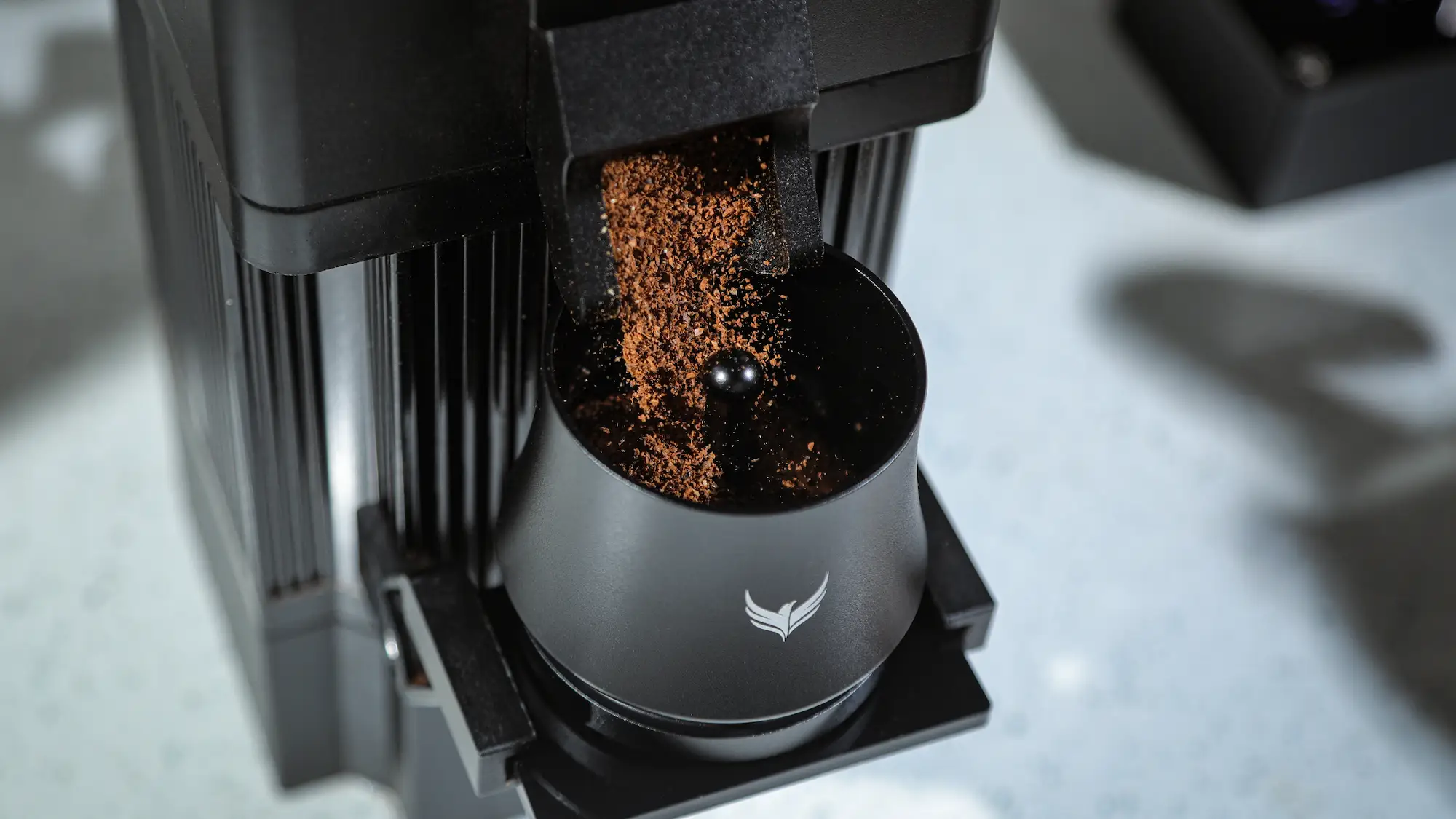
Most grinders — even high-end flat burr models — produce some degree of clumping, especially with fresh, lightly roasted beans that carry more static charge. This is where a blind coffee shaker earns its place in your workflow. By physically breaking apart those clumps before they reach the basket, you give yourself a far more level playing field before you even pick up your tamper.
How a Blind Shaker Works: Step by Step
Using a blind espresso shaker adds roughly five seconds to your puck preparation routine. Here is how it works:
- Dose your coffee. Grind directly into the shaker cup or transfer from your dosing cup. Weigh your dose as you normally would.
- Seal the lid. Place the walnut lid firmly on top. The tight fit prevents any grounds from escaping during shaking.
- Shake vigorously. Flip the shaker upside down and shake firmly for 3–5 seconds. The grounds tumble through the enclosed space, breaking apart clumps and redistributing evenly.
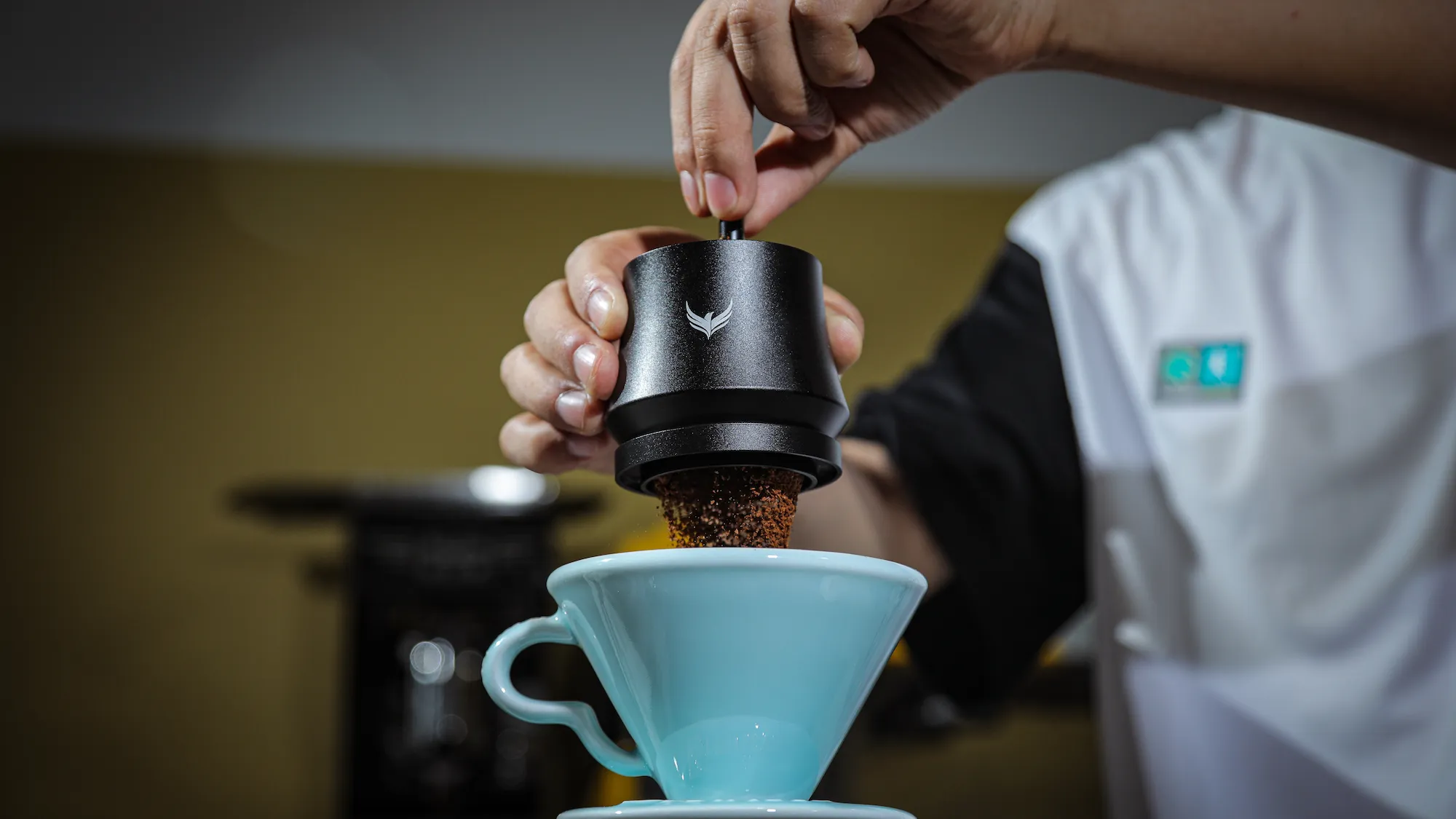
- Place on your portafilter. Set the shaker (open side down) onto your portafilter basket. On magnetic models like the KNODOS, the base locks onto the basket rim with a satisfying snap — no wobble, no mess.
- Flip and transfer. Invert the portafilter and shaker together, then lift the shaker away. Declumped grounds fall into the basket in a uniform layer.
- Tamp. With grounds already evenly distributed, your tamp compresses a consistent bed. No more tilted or uneven pucks.
The entire shaking process takes less time than a single WDT pass, and the magnetic base means you never have to worry about spilling grounds during the transfer. We have found that baristas who add a blind shaker step see the biggest improvement in shot consistency, especially when working with single-dose grinders that tend to produce more static.
Blind Shaker vs. WDT Tool vs. Dosing Cup
Espresso accessories can overlap in purpose, so it helps to understand what each tool actually does.
A dosing cup is a simple transfer vessel. You grind into it, then flip it onto your portafilter to move grounds from point A to point B. It does not break up clumps or distribute grounds — it just prevents mess. A standard dosing cup is great for keeping your workspace tidy, but it is not a distribution tool.
A WDT tool (Weiss Distribution Technique) uses fine needles to stir and separate grounds directly inside the basket. It is an effective method — Barista Hustle has documented its benefits extensively — but it requires some technique and takes 5–10 seconds of careful stirring to do properly.
A blind espresso shaker sits between these two. It transfers grounds like a dosing cup and distributes them like a WDT tool, but through shaking rather than stirring. The advantage is speed and simplicity: there is no technique to learn. Shake, transfer, tamp.
Many serious home baristas use a blind shaker and a WDT tool together — the shaker for macro-level declumping and a quick WDT pass for fine detail work. But if you want just one distribution tool, a blind shaker gives you the most improvement for the least effort.
Choosing the Right Size for Your Machine
Blind shakers are sized to match your portafilter basket. Getting the right diameter ensures a snug, secure fit — especially important for magnetic models where the base needs to sit flush against the basket rim.
54mm — Designed for Breville/Sage machines (Bambino, Barista Express, Barista Pro, Barista Touch, Infuser). If you use a bottomless portafilter on your Breville, the 54mm is your match. This is the most common home espresso size.
58mm — The professional standard. Fits machines from E61 group heads, Lelit, Rocket, Profitec, ECM, La Marzocco, and many more. If your basket takes a 58mm puck screen, this is your size.
Not sure which size you need? The KNODOS Machine Finder tool lets you search by machine model to find compatible accessories instantly.
Why Choose the KNODOS Blind Espresso Shaker?
We designed the KNODOS Blind Espresso Shaker around three principles: function, durability, and feel. The body is crafted from high-quality anodized aluminum — lightweight at just 0.34 kg, corrosion-resistant, and built to handle daily use without showing wear. The conical interior shape promotes ground movement during shaking, preventing dead spots where clumps could hide.
The natural walnut lid is not just aesthetic. Wood is warmer to the touch than metal, does not pick up static from coffee grounds, and provides a comfortable grip during the shaking step. It seals firmly onto the cup to keep grounds contained.
The magnetic base is what sets this shaker apart from basic dosing cups. It snaps onto your portafilter basket rim and holds firm during the flip-and-transfer step. No need to pinch the shaker and portafilter together with your fingers — the magnet does the work. It is a small detail that makes a surprisingly big difference in your daily workflow.
Beyond shaking, the KNODOS model doubles as a standard dosing cup and even a coffee bean measuring cup when you remove the lid. One tool, multiple functions — that is the kind of efficiency we build into every KNODOS accessory.
KNODOS Blind Espresso Shaker — Available in Two Sizes
- 54mm (Breville/Sage) — Shop on Amazon
- 58mm (E61/Lelit/Rocket/La Marzocco) — Shop on Amazon
Premium anodized aluminum · Natural walnut lid · Magnetic base · Smooth interior · $29.99
Frequently Asked Questions
What is a blind shaker for espresso?
A blind shaker is a cup-shaped accessory that sits on top of your portafilter basket. You dose coffee grounds into it, place the lid on, and shake. The enclosed design breaks up clumps and redistributes the grounds evenly before tamping, leading to more consistent espresso extraction.
Is a blind shaker the same as a dosing cup?
They share a similar shape, but a blind shaker is specifically designed with a sealed lid and smooth interior for shaking and declumping grounds. A standard dosing cup is open-topped and mainly transfers grounds from grinder to portafilter. Many blind shakers, including the KNODOS model, can double as a dosing cup when used without the lid.
Does a blind shaker replace a WDT tool?
A blind shaker and a WDT tool serve similar goals — breaking clumps and distributing grounds — but through different methods. The shaker uses gravity and motion, while a WDT tool uses fine needles to stir. Many baristas use both: the shaker first to declump, then a quick WDT pass for fine-tuning. Either tool alone will improve your results compared to no distribution at all.
What size blind shaker do I need for my espresso machine?
Choose your blind shaker size based on your portafilter basket diameter. Breville machines typically use 54mm baskets, while most prosumer and commercial machines like the Lelit Bianca or Rocket use 58mm baskets. The shaker should match your basket size exactly for a snug, magnetic fit.
How do you use a blind espresso shaker?
Grind your dose into the shaker cup, place the walnut lid on top, flip it upside down, and shake vigorously for 3–5 seconds. Then remove the lid, place the shaker on your portafilter (the magnetic base locks it in place), and flip to transfer the declumped grounds into the basket. Tamp as usual.
Related Guides
- What Is a WDT Tool? — The other way to break up clumps before tamping.
- What Is an Espresso Distributor? — Levelling the bed once the grounds are declumped.
- What Is an Espresso Dosing Funnel? — Moving the shaken dose into the basket cleanly.