
What Is an Espresso Distributor and Do You Need One? (2026)
What Is an Espresso Distributor?
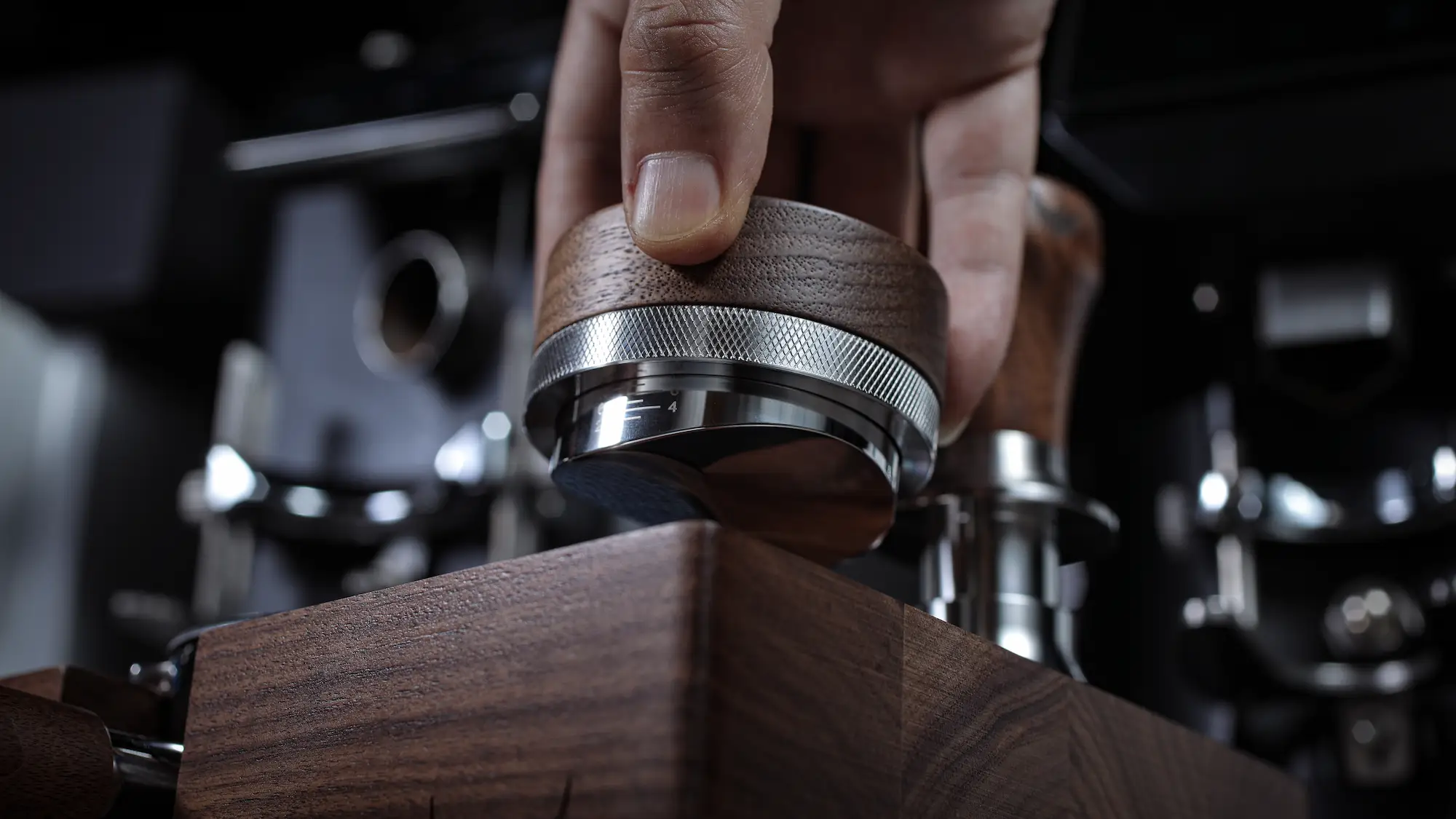
An espresso distributor — also called a distribution tool or coffee leveler — is a flat-based tool that evens out the surface of your coffee grounds in the portafilter before you tamp. You rest it on top of the dose and rotate it a few turns; the base sweeps the grounds outward and downward into a level, uniform bed, so water can flow through the puck evenly during extraction.
If you have ever ground straight into a portafilter, you have seen the grounds land as an uneven mound — taller on one side, with hollows and clumps. Tamping that mound flat on top does not fix what is uneven underneath. A distributor grooms the bed first, spreading the coffee edge to edge so the puck is consistent before the tamper ever touches it. The result is a flatter, denser puck and more repeatable shots.
Why Even Distribution Matters
Espresso is brewed under roughly nine bars of pressure, and water always takes the path of least resistance. If one part of the coffee bed is looser or thinner than the rest, water races through that spot instead of soaking the whole puck evenly. This is called channeling, and it is the single most common cause of sour, weak, or inconsistent home espresso.
The Specialty Coffee Association identifies even extraction across the coffee bed as one of the foundations of quality espresso. A distributor attacks the problem at its source: by leveling the grounds into a uniform layer, it removes the high and low spots that cause water to find shortcuts. As Barista Hustle notes in its work on grooming and distribution, how evenly the grounds are spread before tamping has a direct effect on how evenly the shot extracts.
Espresso Distributor vs Tamper: What's the Difference?
This is the most common question about distribution tools, and the short answer is that they do two different jobs in the same workflow. The distributor levels and spreads the grounds; the tamper compresses them. One prepares the bed, the other locks it in.
| Feature | Distributor (Leveler) | Tamper |
|---|---|---|
| Main job | Levels and spreads grounds evenly | Compresses grounds into a firm puck |
| Action | Rest on top and rotate | Press straight down with pressure |
| When you use it | After dosing, before tamping | Last step before locking in the portafilter |
| Applies pressure? | No — levels without compressing | Yes — around 15–30 lb of force |
| Fixes | Uneven surface, mounding | Loose, under-compressed puck |
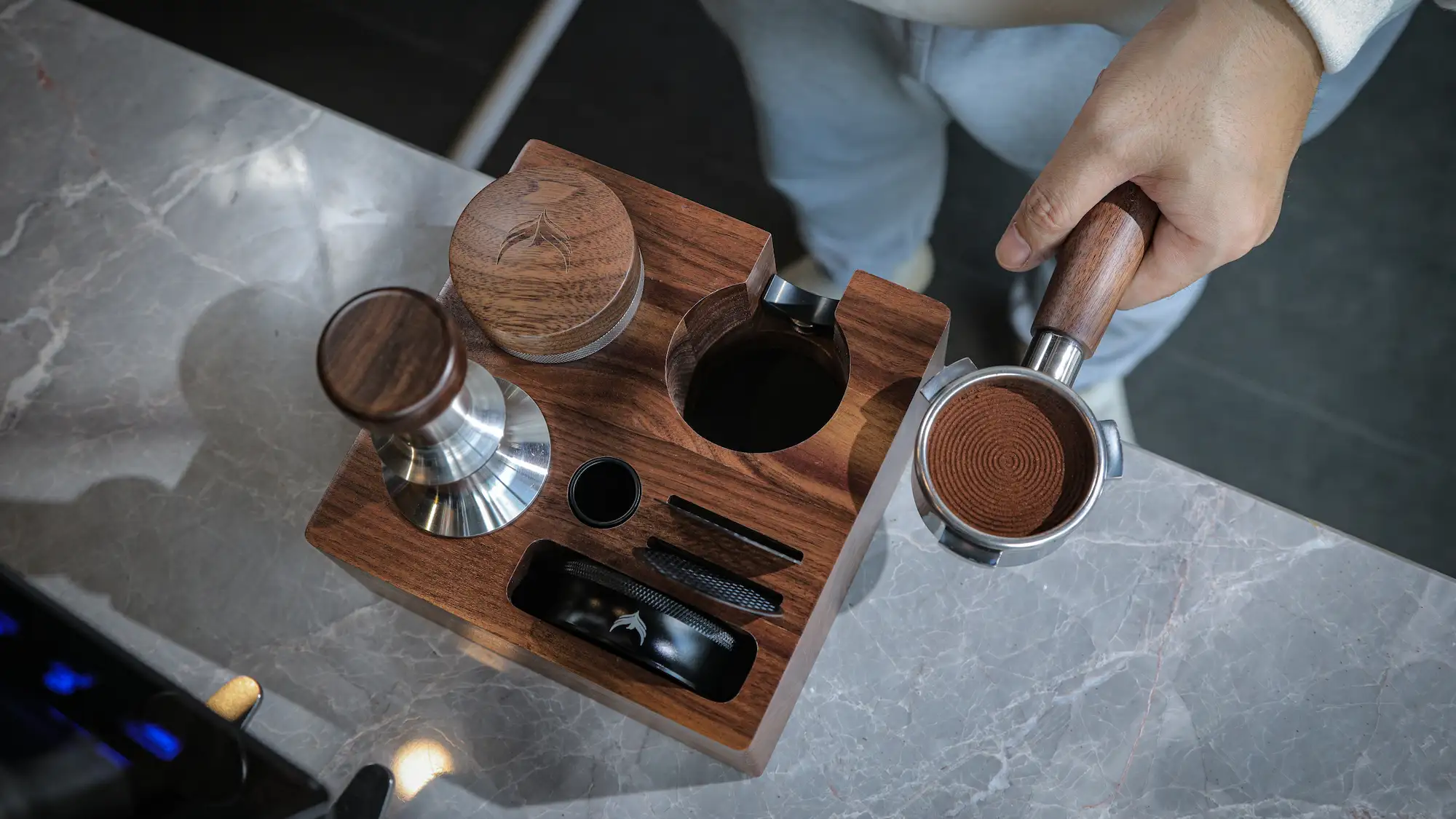
Because they solve different problems, the two tools work best together: distribute first to flatten and even the bed, then tamp to compress it into a dense, level puck. Tamping an uneven dose simply presses the unevenness in place, which is why many baristas add a distributor once they have a tamper they trust. If you are still choosing a tamper, our guide on how to tamp espresso like a pro covers the pressure and technique side in detail.
How to Use an Espresso Distributor
Using a distribution tool takes only a few seconds and quickly becomes second nature.
Step 1: Dose and settle the grounds
Grind your dose into the portafilter. If your grind clumps, stir the grounds first with a WDT tool — its fine needles break up clumps deep in the basket that a surface leveler cannot reach — see our full WDT tool guide for how it works. A dosing funnel helps keep everything inside the basket while you work.
Step 2: Set the depth
Adjustable-depth distributors let you dial how far the base sits into the basket. Set it to match your dose so the tool just kisses the surface of the grounds rather than gouging into them. Once it is dialed in for your usual dose, you rarely need to change it.
Step 3: Level with a gentle rotation
Rest the distributor flat on the basket rim and rotate it two or three times — clockwise, then counter-clockwise if you like. Let the weight of the tool do the work; you are sweeping the surface flat, not pressing down. Lift it away and you should see a smooth, even bed.
Step 4: Tamp
Finish with a level tamp to compress the bed into a firm puck, then lock in your portafilter and pull your shot. That is the full puck-prep chain: distribute, then tamp.
Choosing the Right Distributor for Your Machine
A distributor has to match your portafilter basket diameter, just like a tamper does. Too small and it leaves an untouched ring of grounds around the edge; too large and it will not sit in the basket at all.
| Portafilter Size | Machines | Precision Base |
|---|---|---|
| 51mm | De'Longhi Dedica, La Specialista, Stilosa | ~50.5mm |
| 54mm | Breville / Sage Barista Express, Pro, Touch, Bambino Plus, Infuser, Duo Temp Pro | 53.3mm |
| 58mm | Gaggia Classic, Rancilio Silvia, Lelit, Rocket, Profitec, ECM, E61 group heads | 58.3mm |
| 58.5mm | La Marzocco Linea Mini; VST / IMS precision baskets | 58.3mm+ |
Notice that precision distributors are machined slightly under the nominal size — a quality "54mm" tool measures about 53.3mm so it sweeps cleanly to the basket wall without binding. Beyond size, look for three things: adjustable depth so you can match your dose, a solid stainless steel base with a clean CNC-machined finish for an even sweep, and a comfortable handle you will enjoy using every day. If you are not sure which size your machine uses, the KNODOS Machine Finder maps your exact model to the right size.
Why Choose a KNODOS Distributor
KNODOS distribution tools are built around the same idea as the rest of our line: precise mechanics in materials that look and feel like part of a real espresso bar, not a disposable gadget.
KNODOS Espresso Distribution Tool
A precision-machined stainless steel base fills the basket edge to edge for a clean, even sweep, while the adjustable-depth design lets you level to your exact dose without pressing or compressing the grounds. Each tool is topped with a hand-finished solid wood handle for an ergonomic, comfortable grip.
- 51mm — for De'Longhi and other 51mm machines
- 54mm (53.3mm base) — for Breville / Sage portafilters
- 58mm (58.3mm base) — for E61, Gaggia, Rocket, Lelit, Profitec and ECM
- 58.5mm — for VST / IMS precision baskets
- Handles in oak, walnut, rosewood and maple to match your setup
Browse the KNODOS distributor collection, or find your exact fit with the Machine Finder.
Pair the distributor with a matching calibrated tamper and a WDT tool and you have a complete puck-prep chain — stir, level, tamp — that turns inconsistent shots into a repeatable daily routine. A distributor is one of the most affordable upgrades you can make, and one of the most noticeable once channeling stops sabotaging your extractions.
Frequently Asked Questions
What does an espresso distributor do?
An espresso distributor levels and evens out the bed of coffee grounds in your portafilter before tamping. You rest it on the dose and rotate it, and the flat base sweeps the grounds into a uniform layer. This even surface helps water pass through the puck consistently during extraction, which reduces channeling and improves shot quality.
Do I need a distributor if I already have a tamper?
A distributor and a tamper do different jobs. The distributor levels and spreads the grounds evenly across the basket; the tamper then compresses that level bed into a firm puck. Tamping uneven grounds locks in the unevenness, so a distributor used before tamping helps you get a flat, consistent puck and more repeatable shots. Many home baristas use both.
What is the difference between a distributor and a WDT tool?
A WDT tool uses fine needles to stir and break up clumps deep inside the dose, while a distributor levels the surface of the bed with a flat rotating base. They are complementary, not interchangeable: WDT fixes clumping and vertical density, and the distributor grooms the top into a flat, even surface before tamping. For the best results, use the WDT tool first, then the distributor.
What size espresso distributor do I need?
Match the distributor to your portafilter basket diameter: 51mm for most De'Longhi machines, 54mm for Breville and Sage (Barista Express, Pro, Touch, Bambino Plus, Infuser), and 58mm for E61 group, Gaggia, Rocket, Lelit, Profitec, and ECM machines. La Marzocco and VST/IMS precision baskets use 58.5mm. Precision distributors are machined slightly under the nominal size (for example 53.3mm for a 54mm basket) for a clean edge-to-edge sweep.
Can a distributor replace tamping?
No. A leveling distributor evens out the grounds without applying real compression, so you still need to tamp afterward to form a dense, uniform puck. The distributor prepares a flat, even bed; the tamper compresses it. They are two separate steps in puck preparation.
Is an espresso distributor worth it?
For most home baristas, yes. A distributor is an inexpensive tool that targets channeling, the most common cause of uneven, inconsistent espresso. If you grind into the portafilter and your shots taste sour or pull unevenly, leveling the bed before tamping is one of the cheapest and most noticeable upgrades you can make. If you already get flat, even pucks using a WDT tool and a careful tamp, a distributor is more of a convenience than a necessity.
Which way do you spin an espresso distributor?
Rest the distributor flat on the basket rim and rotate it gently two or three turns. The direction does not matter much, and many baristas go clockwise and then counter-clockwise. Use light pressure and let the tool's weight level the surface; pressing down hard can compress the grounds unevenly. Stop once the surface looks smooth and flat.
What is the difference between a distributor and an OCD tool?
They are essentially the same category of tool. OCD stands for Ona Coffee Distributor, a popular spinning leveler, and the name is often used generically for any adjustable-depth distribution tool. Whether it is called a distributor, a leveler, or an OCD-style tool, the job is the same: rotate a flat base over the grounds to level the bed before tamping. KNODOS distributors use an adjustable-depth design so you can match the tool to your dose.